
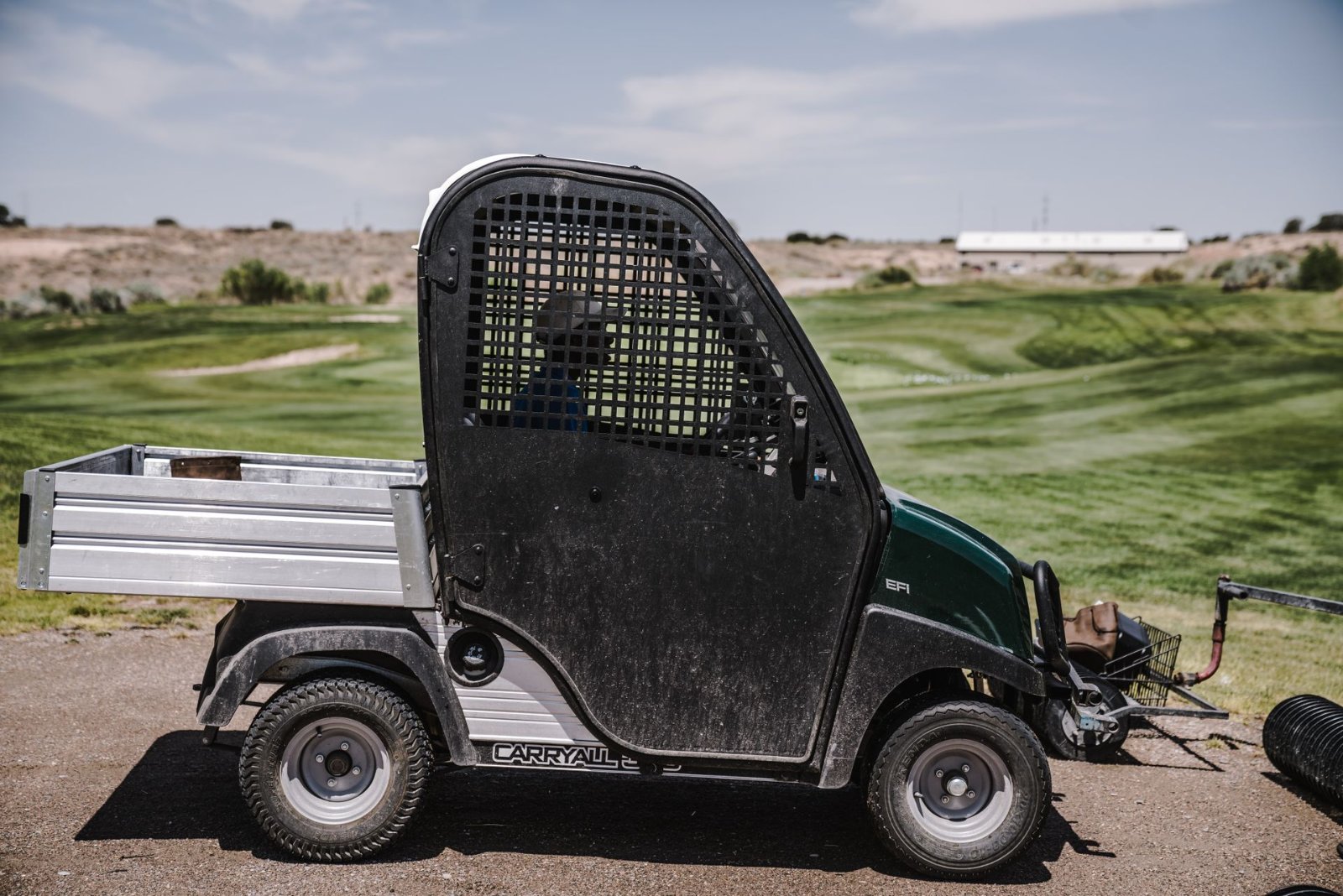
If you’ve been driving your golf cart around Wellington, Florida, and you’ve started noticing a rhythmic clunking, banging, or knocking sound coming from underneath the vehicle, you’re not alone. That unsettling noise is one of the most common complaints we hear from golf cart owners across South Florida — and in most cases, the culprit is the leaf spring suspension system. Understanding what’s causing that sound, why it tends to escalate over time, and what you can do about it can save you a lot of money, frustration, and potential safety headaches down the road.
In this article, we’re going to break down everything you need to know about leaf spring clunking in golf carts — from the basic mechanics of how leaf springs work, to the specific reasons they start making noise, to why that noise almost always gets worse if you ignore it. We’ll also share some practical advice for Wellington golf cart owners on how to address the problem before it turns into a much bigger (and more expensive) repair.
Understanding How Leaf Springs Work in a Golf Cart
Before we dive into the causes of that clunking sound, it helps to understand what leaf springs actually do and why they’re used in so many golf carts in the first place. Leaf springs are one of the oldest and most reliable suspension technologies in the automotive world. In a golf cart, they serve the same fundamental purpose they’ve served in vehicles for over a century — absorbing shock, supporting the weight of the vehicle, and maintaining consistent contact between the tires and the ground.
A typical golf cart leaf spring assembly consists of several curved metal strips (called “leaves”) that are stacked on top of each other and bound together. The assembly is mounted between the axle and the frame of the cart, and it flexes up and down as the cart rolls over bumps, dips, and uneven terrain. The flexibility of the spring is what cushions the ride and prevents every little bump from being transmitted directly into the frame and the passengers.
The Key Components Involved in Leaf Spring Noise
When we talk about leaf spring clunking, we’re usually talking about a failure or deterioration in one or more of several key components. These include:
The leaves themselves — The individual metal strips that make up the spring pack. Over time, these can crack, shift, or lose their tension.
The U-bolts — These are the fasteners that clamp the leaf spring assembly to the axle. If they loosen or corrode, the entire spring pack can shift and clunk.
The center bolt — This bolt runs through the center of all the leaves and holds them aligned. If it breaks or loosens, the leaves can slide relative to each other and make significant noise.
The spring shackles and hangers — These are the mounting points that attach the leaf spring to the frame of the cart. Worn bushings in the shackles are one of the most common sources of clunking sounds.
The rubber bushings — Located in the spring eyes (the looped ends of the spring) and the shackles, these bushings provide cushioning and reduce metal-on-metal contact. When they wear out, things get very noisy very quickly.
The Most Common Causes of Leaf Spring Clunking in Golf Carts
Now that you have a foundation for understanding the system, let’s get into the specific reasons why your leaf springs might be making that clunking or banging sound. In our experience working with golf cart owners throughout Wellington and the broader Palm Beach County area, these are the issues we see most frequently.
1. Worn or Deteriorated Rubber Bushings
This is, without question, the number one cause of leaf spring clunking in golf carts. The rubber bushings that sit inside the spring eyes and shackles are designed to act as a buffer between the metal components. They prevent direct metal-to-metal contact, reduce vibration, and allow the spring to pivot smoothly as it flexes.
Here in Wellington, Florida, the combination of heat, humidity, and UV exposure is absolutely brutal on rubber components. Over time — and sometimes faster than you’d expect in our South Florida climate — the rubber dries out, cracks, compresses, or simply disintegrates. Once the bushing material degrades enough, there’s nothing left to cushion the movement, and you get that characteristic clunking sound as metal slaps against metal every time the spring flexes.
“In South Florida’s climate, rubber bushings in a golf cart suspension system can deteriorate significantly faster than they would in cooler, drier climates. What might last 8-10 years in a northern state might only last 4-6 years here — and sometimes less if the cart is stored outdoors.”
The tricky thing about bushing wear is that it often happens gradually. The first signs might be a very faint knock that you only notice on particularly rough pavement. But as the bushing continues to wear, the play in the joint increases, the metal-on-metal contact gets more severe, and the noise gets louder and more frequent.
2. Loose or Corroded U-Bolts
The U-bolts that clamp your leaf spring assembly to the axle are under constant stress. Every bump, every turn, every load change puts force on those bolts. Over time, they can work themselves loose — especially if they weren’t torqued properly in the first place, or if they’ve gone through many cycles of heating and cooling.
Corrosion is also a major issue in Wellington and throughout South Florida. The salt air, frequent rain, and high humidity create an environment where steel fasteners can corrode surprisingly quickly. Corroded U-bolts may appear to be tight but can actually be significantly weakened, and the corrosion can prevent proper clamping force, allowing the spring pack to shift on the axle.
When U-bolts are loose or corroded, the entire spring pack can move relative to the axle during driving. This movement creates a clunking or banging sound that can be quite alarming — and for good reason, because a seriously loose spring pack is a genuine safety hazard.
3. Broken or Cracked Leaf Spring Leaves
The individual leaves in a spring pack are made from hardened steel, but they’re not indestructible. Golf carts that are regularly driven over rough terrain, that carry heavy loads, or that have been in service for many years can develop cracks in one or more leaves. A cracked leaf will flex differently than an intact one, and the broken ends can shift and clunk against each other or against adjacent leaves.
In some cases, a broken leaf will cause the spring pack to sag on one side, giving the cart an obvious lean. But in other cases — particularly when an interior leaf (not the main leaf at the top) breaks — the damage may not be visually obvious at all. The clunking sound might be your only clue that something is wrong.
4. Worn or Damaged Spring Shackles
The spring shackles are the links that connect the rear eye of the leaf spring to the frame. They’re designed to allow the spring to lengthen and shorten as it flexes (since a spring that’s under load is actually shorter than a spring at rest). Shackles pivot on bushings, and when those bushings wear out, you get the same metal-on-metal clunking we described earlier.
Shackles can also become bent or cracked, particularly if the cart has been driven over a significant obstacle or has been involved in a collision. A damaged shackle can cause unpredictable spring behavior and contribute to clunking noises.
5. Loose Center Bolt
The center bolt that holds all the leaves in alignment is a small but critically important component. If it loosens or breaks, the individual leaves can slide sideways relative to each other. This misalignment causes the leaves to rub and clunk against each other during normal spring flexion. It can also cause the spring pack to shift on the axle seat, creating additional noise and potentially damaging the axle.
6. Insufficient or Degraded Lubrication
Some leaf spring designs include inter-leaf lubrication — a coating or pad between the leaves that reduces friction and noise as the leaves slide against each other. When this lubrication dries out or wears away, the leaves can squeak and clunk as they move relative to each other. This is sometimes called “spring interleaf noise” and it’s particularly common in older spring packs that haven’t been serviced in a while.
Why the Clunking Gets Worse Over Time
One of the most important things to understand about leaf spring noise is that it almost never stays the same. In virtually every case we’ve seen at South Florida Golf Carts and in our conversations with golf cart owners throughout Wellington, the noise that starts as an occasional, minor knock will progressively worsen if left unaddressed. Here’s why.
The Snowball Effect of Mechanical Wear
Mechanical wear rarely happens in isolation. When one component starts to fail, it typically places additional stress on adjacent components, causing them to wear faster too. For example, when a rubber bushing wears out and allows metal-on-metal contact, the metal itself starts to wear. The worn metal creates more play in the joint, which increases the severity of the impact with each cycle, which accelerates the wear further. It’s a vicious cycle that picks up speed over time.
Similarly, when a center bolt loosens, the misaligned leaves start to wear against each other. The wear creates more play, which allows more misalignment, which causes more wear. What starts as a minor looseness can eventually lead to significant damage to multiple leaves.
The Role of Environmental Conditions in Wellington, Florida
Wellington’s climate plays a significant role in how quickly leaf spring problems escalate. The heat accelerates the degradation of rubber components. The humidity and rain promote corrosion of metal parts. The UV exposure from our intense South Florida sun breaks down rubber and plastic components even faster. And the frequent use of golf carts in Wellington — whether on the trails, in communities, or at equestrian events — means these components are cycling through stress repeatedly, day after day.
What might be a slow-developing problem in a cooler, drier climate can become a rapidly worsening issue here. A bushing that’s 50% worn might last another year in Minnesota but might be completely gone in three months in Palm Beach County.
Increased Play Leads to Increased Impact Forces
Here’s a key mechanical concept that explains why clunking gets worse: as components wear and clearances increase, the impact forces during each clunk get larger. Think of it this way — when a bushing is brand new, the spring eye fits snugly with essentially no free play. As the bushing wears, a small gap develops. When the spring flexes, the eye travels through that gap before making contact, building up a small amount of velocity before the impact. The larger the gap, the more velocity builds up, and the harder the impact. This is why a clunk that starts soft and occasional can become a loud bang that happens constantly.
Secondary Damage from Unaddressed Clunking
Perhaps the most compelling reason to address leaf spring clunking sooner rather than later is the secondary damage it can cause. When leaf springs are clunking, they’re not just making noise — they’re transmitting abnormal forces into the frame, the axle, and other suspension components. Over time, this can cause:
Frame damage — The mounting points for the leaf springs can crack or deform from repeated impact forces.
Axle damage — An improperly secured spring pack can damage the axle seat and potentially cause axle failure.
Tire wear — Misaligned or improperly functioning springs can cause uneven tire wear, shortening the life of your tires significantly.
Wheel bearing damage — Abnormal forces transmitted through a damaged suspension system can accelerate wheel bearing wear.
What starts as a relatively inexpensive bushing replacement can turn into a frame repair, axle replacement, and new tires if left unaddressed long enough. We’ve seen it happen, and it’s never a fun conversation to have with a customer.
How to Diagnose Leaf Spring Clunking in Your Golf Cart
If you’re hearing a clunking sound from your golf cart, here are some steps you can take to help identify whether the leaf springs are the culprit and what specifically might be causing the noise.
Listen Carefully and Take Notes
The character of the noise can give you clues about its source. A clunk that happens only when going over bumps suggests a loose component that’s making impact when the spring compresses. A squeak or groan that happens during normal driving might indicate interleaf friction. A clunk that happens when you turn might point to a bushing in the shackle rather than the spring eye. A loud bang that happens when you hit a significant bump could indicate a broken leaf.
Note whether the sound comes from the front or rear of the cart, from the left or right side, and under what conditions it occurs. This information will be very helpful when you take the cart in for service.
Visual Inspection
With the cart safely supported on jack stands (not just a floor jack), you can do a visual inspection of the leaf spring assembly. Look for:
Cracked or broken leaves — Look for any leaves that appear to have a gap or break across their width.
Worn or missing bushings — Look at the spring eyes and shackle ends. If you can see bare metal or significant gaps, the bushings are worn.
Rust and corrosion — Significant rust on U-bolts, shackles, or the spring pack itself is a warning sign.
Obvious looseness — Try to wiggle the spring pack by hand. There should be minimal movement. Significant play indicates worn bushings or loose fasteners.
The Pry Bar Test
A mechanic’s pry bar can be used to check for play in the spring bushings. With the cart safely supported, use a pry bar to apply leverage to the spring at various points and watch for movement at the spring eyes and shackle ends. Any visible movement at these joints indicates worn bushings. This is a test best done by someone comfortable with basic mechanical work — if you’re not sure, take it to a professional.
What to Do About Leaf Spring Clunking
Once you’ve identified that your leaf springs are the source of the clunking, the good news is that this is a very fixable problem. The appropriate repair depends on what specifically is causing the noise.
Bushing Replacement
If worn bushings are the culprit — and they often are — the fix is to replace them. This involves disassembling the spring mounting hardware, pressing out the old bushings, and pressing in new ones. It’s a job that requires some mechanical skill and the right tools, but it’s well within the capabilities of a competent golf cart technician. At South Florida Golf Carts, this is one of the most common suspension repairs we perform for customers throughout the Wellington area.
U-Bolt Replacement and Torquing
If loose or corroded U-bolts are contributing to the problem, they should be replaced with new hardware and torqued to the proper specification. This is not a repair to guess at — the proper torque specification matters, and under-torqued U-bolts will loosen again quickly while over-torqued ones can crack or strip.
Leaf Spring Replacement
If one or more leaves are cracked or broken, or if the spring pack has sagged significantly, replacement is often the best option. In many cases, it makes sense to replace the entire spring pack rather than just the damaged leaf, particularly on older carts where the remaining leaves may also be near the end of their service life.
Lubrication
In some cases, particularly where interleaf friction is causing squeaking or minor clunking, the leaves can be carefully separated, cleaned, and lubricated with an appropriate leaf spring lubricant. This is more of a temporary measure than a permanent fix, but it can provide relief while you plan a more comprehensive repair.
Preventing Leaf Spring Problems in Wellington’s Climate
Given how hard South Florida’s climate is on suspension components, prevention is genuinely worth the effort. Here are some practical steps Wellington golf cart owners can take to extend the life of their leaf springs and avoid that dreaded clunking sound.
Regular Inspection
Make it a habit to visually inspect your leaf spring assembly at least once or twice a year. Look for the warning signs we described above — corrosion, visible wear, obvious looseness. Catching problems early is almost always cheaper than addressing them after they’ve progressed.
Keep It Clean
Washing the underside of your golf cart periodically helps remove the salt, dirt, and moisture that accelerate corrosion. This is particularly important if you drive near the coast or on roads that are treated with any kind of salt or chemical.
Address Small Issues Promptly
If you notice a new noise — even a minor one — don’t wait to have it checked out. Small problems in suspension systems have a way of becoming big problems quickly, especially in our climate. A bushing replacement done promptly is far less expensive than the frame repair or axle replacement that can result from ignoring the problem.
Work with a Knowledgeable Local Service Provider
Having a relationship with a local golf cart service provider who understands the specific challenges of South Florida’s climate is invaluable. The team at South Florida Golf Carts, serving Wellington and the surrounding Palm Beach County area, has extensive experience with exactly these kinds of issues. They understand how the local environment affects golf cart components and can help you develop a maintenance schedule that makes sense for how and where you drive your cart.
When to Seek Professional Help
While some golf cart maintenance tasks are well within the abilities of a mechanically inclined owner, leaf spring repairs often benefit from professional attention. Here’s when you should definitely call in a pro:
If the clunking is loud, sudden, or accompanied by a change in how the cart handles — this could indicate a serious structural failure that makes the cart unsafe to drive.
If you’re not comfortable working underneath a vehicle on jack stands — safety is paramount, and suspension work requires the cart to be safely supported.
If you’ve done a visual inspection and can’t identify the source of the noise — a professional technician has the experience and tools to find problems that aren’t obvious to the untrained eye.
If the problem involves the frame mounting points — frame repairs require welding and structural assessment that should be done by a professional.
“Don’t let a small clunk turn into a big problem. In our experience, the customers who bring their carts in at the first sign of a noise almost always have a much simpler and less expensive repair than those who wait until the noise becomes impossible to ignore.”
Final Thoughts for Wellington Golf Cart Owners
That clunking sound coming from your golf cart’s leaf springs is your cart trying to tell you something. It’s telling you that a component is worn, loose, or broken — and that the situation is only going to get worse if you ignore it. In Wellington’s demanding climate, with its combination of heat, humidity, and heavy golf cart use, suspension components work hard and wear faster than they would in many other parts of the country.
The good news is that leaf spring issues, when caught reasonably early, are very fixable. Whether it’s a simple bushing replacement, a U-bolt swap, or a full spring pack replacement, these are known, well-understood repairs that an experienced golf cart technician can handle efficiently.
If you’re hearing that clunk and you’re in the Wellington, Florida area, reach out to South Florida Golf Carts. Their team has the local knowledge, the experience, and the parts to get your cart riding quietly and safely again. Don’t wait until a minor clunk becomes a major repair — or worse, a safety issue. Take care of your leaf springs, and they’ll take care of you for many more miles of smooth, quiet riding through Wellington’s beautiful communities and trails.
Understanding your golf cart’s suspension system doesn’t require an engineering degree — it just requires a little attention and a willingness to act when something doesn’t sound right. We hope this guide has given you the knowledge you need to recognize leaf spring problems early, understand why they worsen over time, and make informed decisions about how to address them. Happy — and quiet — riding!